
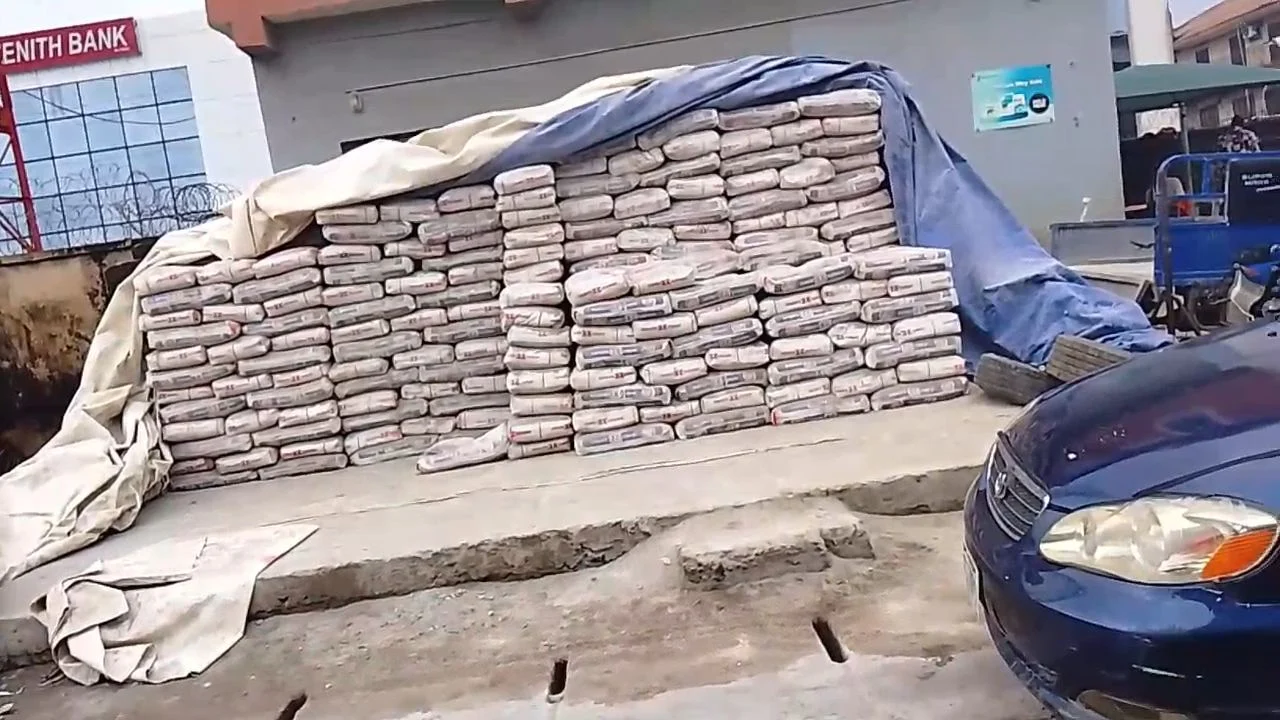
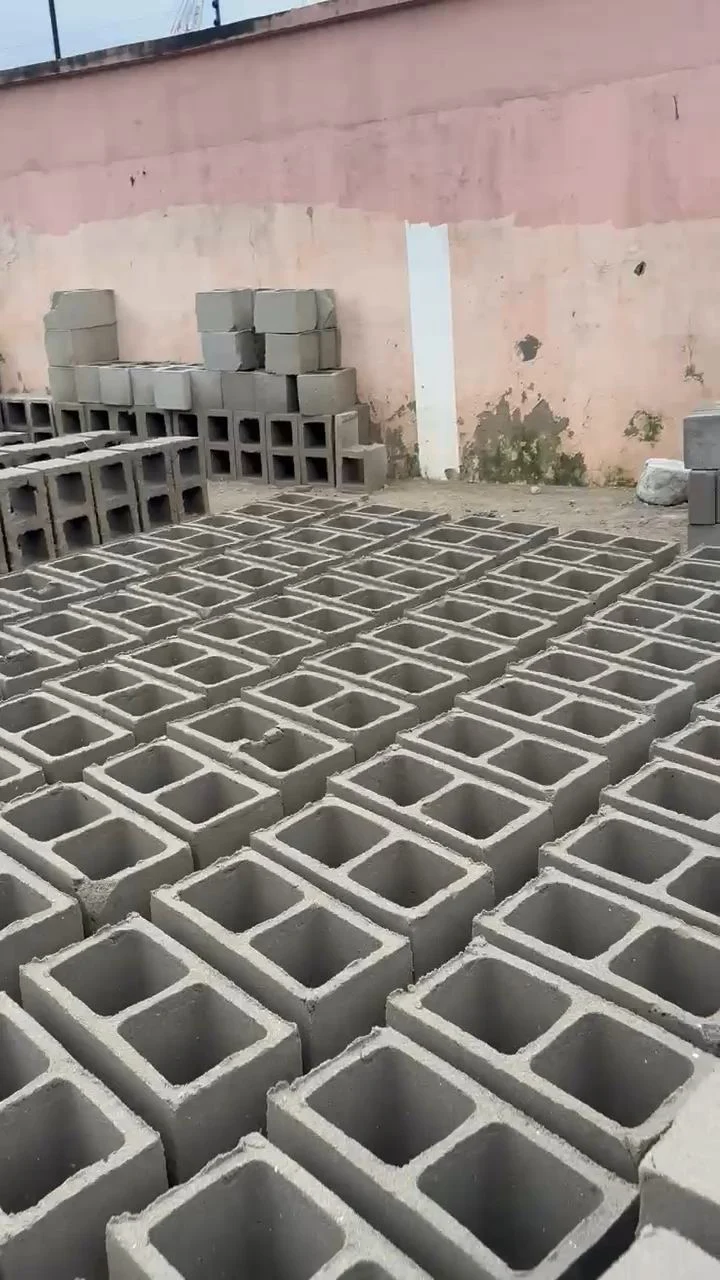
A concrete block is only as good as the mix it is made from and the care it gets after moulding. Naydo Keystone Ventures makes its hollow and solid blocks at its own yard at 40 Irede Road, Satellite Town, Lagos. We control the materials, the mix, the curing and the testing, then deliver across Lagos on our own trucks.
How our blocks are made
Five controlled stages sit between raw material and your site. Each one exists to remove a specific way a block can fail once it is in your wall.
- Raw material selection. Graded aggregate and quality cement, tested for consistency before anything enters production.
- Manufacturing. Precise mixing ratios and vibro compaction give dense, dimensionally accurate units batch after batch, which means less mortar and less render on the wall.
- Inspection. Trained inspectors check dimensions, finish and integrity at several points on the production floor, so weak units never reach the stack.
- Testing. Structural products are compression tested against their rated strength before they are released for dispatch.
- Delivery standards. Careful stacking, loading and handling, so you are not paying for blocks that arrive broken.
The full process, and what happens to a batch that does not pass, is on our quality page.
The blocks we make
All four share a 450 x 225mm face, so the count per square metre is the same whichever you choose. Only the width, and with it the strength, changes.
| Block | Size (mm) | Rated strength |
|---|---|---|
| 4 inch hollow block | 450 x 225 x 100 | 3.5 N/mm² |
| 6 inch hollow block | 450 x 225 x 150 | 4.5 N/mm² |
| 9 inch hollow block | 450 x 225 x 225 | 7.0 N/mm² |
| Solid block | 450 x 225, in 100, 150 or 225 widths | 10 N/mm² |
To match each block to the right wall, see the concrete blocks page or read 6 inch vs 9 inch blocks.
Why curing matters
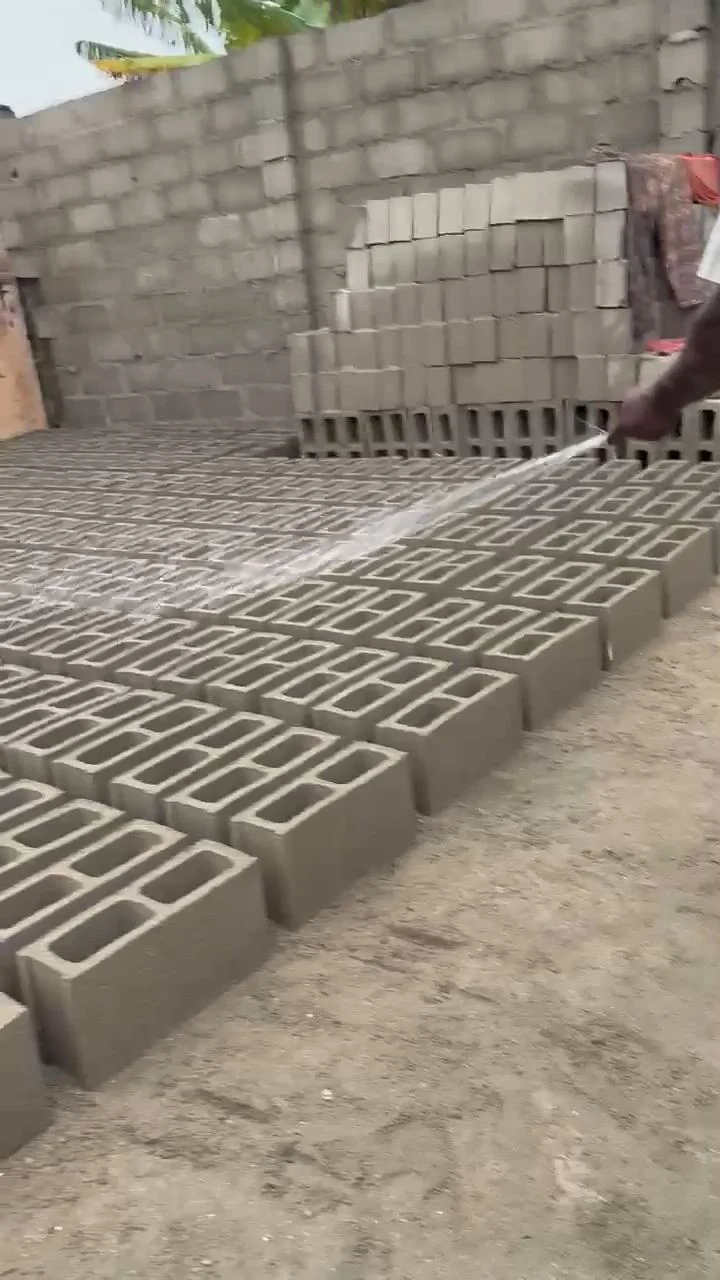
Blocks only reach their rated strength if they are cured properly. Freshly moulded blocks are watered and left to cure in the yard until they have gained their strength, and we do not sell green blocks that are still soft. It is the stage that is easiest to skip and impossible to see once the block is in a wall, which is why it is worth asking any block manufacturer about it.
Questions to ask any block manufacturer
- What is the rated strength of each block size, and what is that figure based on?
- How long are blocks cured before they are sold?
- Is every batch compression tested before dispatch, or only occasionally?
- Are the sizes consistent from one batch to the next?
- Can I visit the yard and see how the blocks are made?
Our answers are on this page and on the quality page, and the last question is an open invitation. Factory visits are welcome at the yard in Satellite Town, Monday to Saturday, 7:00am to 6:00pm. Call +234 903 760 5316 ahead so someone can walk you through production and testing.
Volume orders and repeat orders
Because we manufacture, a repeat order comes from the same mix and the same process, so your second delivery matches the first on the wall. We hold warehouse stock and production capacity for volume orders, and we schedule deliveries against your programme so that blocks arrive as your masons reach that stage. Orders start from a few hundred blocks. Delivery is free within our Lagos service area, which covers Satellite Town, Ikorodu, Lekki, Ikeja, Victoria Island, Ajah, Epe and Yaba, and is quoted per project beyond it.
Request a price for your blocks and we reply with a written price and a delivery date, the same working day wherever possible.
Common questions
Do you make the blocks yourselves, or buy them in?
We mould them ourselves at our yard in Satellite Town. Nothing is bought in and resold.
What does N/mm² mean?
It is the unit for compressive strength: how much load a block can carry for each square millimetre of its face. A higher figure means a stronger block, which is why 9 inch blocks at 7.0 N/mm² suit external and load-bearing walls, and solid blocks at 10 N/mm² go below ground.
Are sandcrete blocks and concrete blocks the same thing?
In Lagos, sandcrete is the everyday name for the hollow and solid blocks used in most walls. What matters is the cement content and the curing, and the rated strength is the figure that reflects both.
Also see our full range of building materials, our paving blocks and the FAQ page.